
A Short Tale of Cows and Cats
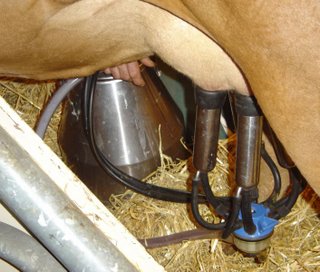
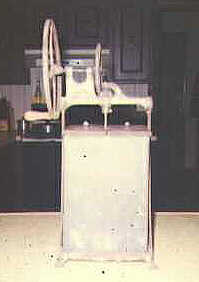
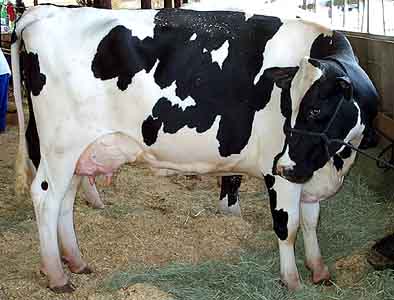
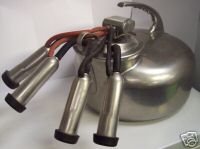
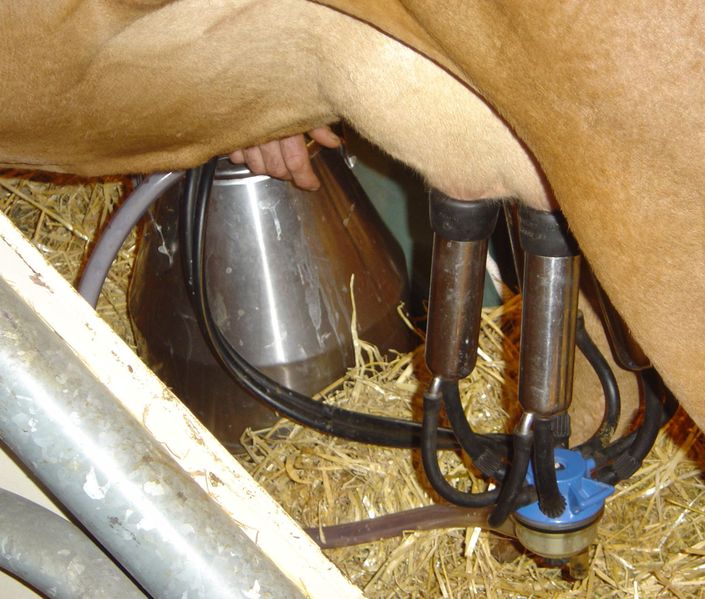
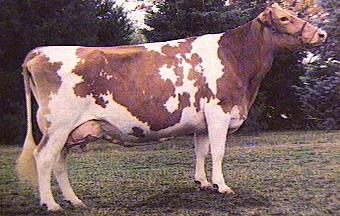
One of my responsibilities on the farm involved herding, feeding, milking, and other milk related tasks as were needing done at any given time. A quick explaination of the photos above first. On top left is a milk can of the type we used to collect the milk from the milking machines and hand milking. Next to the can is a butter churn of the type my aunt and Mrs F used to make the butter we sold. Next is a Holstein cow which made up most of our herd, as they give the most milk overall. Below that are butter churns of the ancient type my aunt and F's wife used to make the butter for our own use, as they claimed the old way was better tasting. I can't find any fault with their reasoning, as they produced the sweetest, salty, home churned butter I've ever tasted before or since those wonderful days. Then is a Jersey cow, we only had a small number of these, probably around fifteen at any time. The milk these cows produce contains the most butterfat and was used for producing butter and our household use. Going down, we find a mechanical milker of the type we used and an example of one being used. We had four of these, and they were the original reason for the generator being purchased. Lastly, we have a Guernsey cow. We had quite a few of these, around twenty-five usually. Their milk was mixed with that from the Holsteins, and comprised the milk we sold. A bit of the Guernsey milk was set aside to settle, and then put through the cream separator and the cream bottled for those wanting cream delivered along with their milk.
As we had no real cold storage, other than the cold cellar, we attempted to keep the herd and milk production equal to the sales. The milk that was left over from the Holsteins and Guernseys was fed to the pigs as the liquid component of the pig slop. In this way, we generally managed to balance things so nothing went to waste. Occasionally if we had a large excess of milk, F would take some to his produce store to sell in the small city. Our milk deliveries usually required two or more runs, due to the number of customers being in the hundreds in four towns. This was when pasturized and homogenized milk was considered less healthy than raw milk from healthy cows. It also tastes one helluva lot better! We were the only farm around willing to comply with the strict laws and regulations governing the sale of raw milk to the public. One of the requirements was that a licensed veterinarian visit the farm every second day and test each cow for disease, sores, etc and the equipment cleanliness. We always passed the probings of two veterinarians with ease, as R was a stickler for detail and ensuring the safety of anything he sold.
We also had several milk goats that my aunt tended and that provided househol milk only. Their milk was always my favorite, and to this day I'll go out of my way occasionally to get a bottle of raw milk and goat milk. One neat thing about goat milk is that it comes from the animal homogenized, as the milkfat stays in suspension in goat milk, unlike that of cows which rises to the top as cream. My aunt usually preferred goat milk for cooking as well, as she claimed it made batter smoother. I couldn't prove it one way or the other, except to reveal that I've never tasted cakes and pies as good as hers were.
One aspect of selling raw milk, was that when the vets discovered a problem cow, the cow had to be put in a separate area at the east end of the barn until it was cleared by the vet to return to the herd. At any one time there would be from three to ten cows in this quarantine area for various reasons. The problems were always just routine things like raw teats, bacterial infection requiring antibiotics, etc. The cows on antibiotics were cleared for milk sales as soon as the infection cleared, but R wouldn't sell their milk for an additional five days to allow all the antibiotics to leave their systems. He was deathly against selling milk with any medication in it, unlike today, where the milk in many states contains antibiotics at all times. Thankfully, antibiotics and bovine growth hormone in milk in Maine must be clearly labeled, so we can avoid the milk if we wish.
One truth about all farms, without exception that I know of, is that they have resident rodent populations of various species, numbers, and habitat. They also have those critters that prey upon the little rodent residents. These generally come in three varieties, snakes, avian carnivores, and little old feral barn kitties. I use the term kitty jokingly, as these felines are not kitties. They are domestic cat varieties that have become semi-wild. They are universally known as "barn cats". The non-poisonous snakes here, the owls and other feathered rodent eaters can't even come close to matching the voracious appetites barn cats have for rodents. Their numbers seem to swell and ebb in direct proportion to the population of the rodents.
This rambling tale has taken a long route to get to the memory that gave birth to it. As the quarantined cows had to be hand milked so as not to injure them further or cause contamination of the milking equipment, they became my little task twice a day. Now from this experience came the chance to study feline behaviors and foibles. I'm convinced that cats can tell time, and I know that feral barn cats have a pecking order. Normally these furballs will avoid any human contact whatsoever, but I discovered, much to my amusement, that all rules are suspended twice a day during hand milking time. Before I arrived on the scene, my aunt did the quarantine cow milking, and it was she who showed me the delights of playing with the barn cats.
As I'd arrive with my armload of milk pails, a small army of the little cats would magically appear, and, if I were late, they'd be awaiting my arrival. Once they saw which cow I'd do first, they'd arrange themselves by social standing. It took me several milkings to notice this, and my aunt claimed she'd never paid that much attention to them. I guess being a young and overly curious lad contributed to my closer observations. At first they just seemed to all want milk, then I noticed the same ones always went first. As soon as I started really monitoring them, it was apparent that the oldest toms went first, then the old females, and so forth to the very newest wobbly kitten on its initial milk outing. What started as simply pouring milk into a few old bowls, put there for that purpose, evolved into a neat interaction twice daily with these amazing creatures. One day I wanted a certain cat to move away from a smaller one and, lacking anything to throw, I squirted milk from the cow at him. From this I discovered cat acrobatics, as, rather than leaving, the old cat jumped up and got a large percentage of the milk stream in his mouth. He then sat waiting expectantly for me to repeat the squirting, which I did. Each time I shot a stream of milk in his direction, he'd intercept it and make a crazy attempt to catch it all. After a few times I was laughing so hard I had to stop, catch my breath, and dry my eyes. It was then I saw him sitting majestically and licking all the excess milk from his drenched body.
From this silly beginning, grew a little game I played every day I milked, until I left the farm for good. The cats figured out quickly that I liked to shoot streams of warm milk at them, and so would now line up in a rough queue awaiting their turn at the milk stream. As we grew more practiced at our little diversion, they'd line up along the top of the low stall wall and, as I directed a stream at one, it would jump up and back to the floor, and try to get every bit of it in its mouth. This provided for some rather unique cat leaps, as they all developed their own style of milk chasing. When I tired of the game or had to get back to work, I simply filled their bowls and they descended on them as though they'd never had milk before. I still wasn't allowed to touch any of them, but it did progress to the point where a momma cat would bring her babies out when they were big enough and teach them to "chase milk".
And that's the end of a silly little tale of a boy and some cats with too much time and imagination. It still remains as one of my best farm memories and I've loved cats ever since. Hope you enjoyed sharing the memory with me and, until next time, take care and drink your milk.



 A Short Tale of Cows and Cats
One of my responsibilities on the farm involved herding, feeding, milking, and other milk related tasks as were needing done at any given time. A quick explaination of the photos above first. On top left is a milk can of the type we used to collect the milk from the milking machines and hand milking. Next to the can is a butter churn of the type my aunt and Mrs F used to make the butter we sold. Next is a Holstein cow which made up most of our herd, as they give the most milk overall. Below that are butter churns of the ancient type my aunt and F's wife used to make the butter for our own use, as they claimed the old way was better tasting. I can't find any fault with their reasoning, as they produced the sweetest, salty, home churned butter I've ever tasted before or since those wonderful days. Then is a Jersey cow, we only had a small number of these, probably around fifteen at any time. The milk these cows produce contains the most butterfat and was used for producing butter and our household use. Going down, we find a mechanical milker of the type we used and an example of one being used. We had four of these, and they were the original reason for the generator being purchased. Lastly, we have a Guernsey cow. We had quite a few of these, around twenty-five usually. Their milk was mixed with that from the Holsteins, and comprised the milk we sold. A bit of the Guernsey milk was set aside to settle, and then put through the cream separator and the cream bottled for those wanting cream delivered along with their milk.
As we had no real cold storage, other than the cold cellar, we attempted to keep the herd and milk production equal to the sales. The milk that was left over from the Holsteins and Guernseys was fed to the pigs as the liquid component of the pig slop. In this way, we generally managed to balance things so nothing went to waste. Occasionally if we had a large excess of milk, F would take some to his produce store to sell in the small city. Our milk deliveries usually required two or more runs, due to the number of customers being in the hundreds in four towns. This was when pasturized and homogenized milk was considered less healthy than raw milk from healthy cows. It also tastes one helluva lot better! We were the only farm around willing to comply with the strict laws and regulations governing the sale of raw milk to the public. One of the requirements was that a licensed veterinarian visit the farm every second day and test each cow for disease, sores, etc and the equipment cleanliness. We always passed the probings of two veterinarians with ease, as R was a stickler for detail and ensuring the safety of anything he sold.
We also had several milk goats that my aunt tended and that provided househol milk only. Their milk was always my favorite, and to this day I'll go out of my way occasionally to get a bottle of raw milk and goat milk. One neat thing about goat milk is that it comes from the animal homogenized, as the milkfat stays in suspension in goat milk, unlike that of cows which rises to the top as cream. My aunt usually preferred goat milk for cooking as well, as she claimed it made batter smoother. I couldn't prove it one way or the other, except to reveal that I've never tasted cakes and pies as good as hers were.
One aspect of selling raw milk, was that when the vets discovered a problem cow, the cow had to be put in a separate area at the east end of the barn until it was cleared by the vet to return to the herd. At any one time there would be from three to ten cows in this quarantine area for various reasons. The problems were always just routine things like raw teats, bacterial infection requiring antibiotics, etc. The cows on antibiotics were cleared for milk sales as soon as the infection cleared, but R wouldn't sell their milk for an additional five days to allow all the antibiotics to leave their systems. He was deathly against selling milk with any medication in it, unlike today, where the milk in many states contains antibiotics at all times. Thankfully, antibiotics and bovine growth hormone in milk in Maine must be clearly labeled, so we can avoid the milk if we wish.
One truth about all farms, without exception that I know of, is that they have resident rodent populations of various species, numbers, and habitat. They also have those critters that prey upon the little rodent residents. These generally come in three varieties, snakes, avian carnivores, and little old feral barn kitties. I use the term kitty jokingly, as these felines are not kitties. They are domestic cat varieties that have become semi-wild. They are universally known as "barn cats". The non-poisonous snakes here, the owls and other feathered rodent eaters can't even come close to matching the voracious appetites barn cats have for rodents. Their numbers seem to swell and ebb in direct proportion to the population of the rodents.
This rambling tale has taken a long route to get to the memory that gave birth to it. As the quarantined cows had to be hand milked so as not to injure them further or cause contamination of the milking equipment, they became my little task twice a day. Now from this experience came the chance to study feline behaviors and foibles. I'm convinced that cats can tell time, and I know that feral barn cats have a pecking order. Normally these furballs will avoid any human contact whatsoever, but I discovered, much to my amusement, that all rules are suspended twice a day during hand milking time. Before I arrived on the scene, my aunt did the quarantine cow milking, and it was she who showed me the delights of playing with the barn cats.
As I'd arrive with my armload of milk pails, a small army of the little cats would magically appear, and, if I were late, they'd be awaiting my arrival. Once they saw which cow I'd do first, they'd arrange themselves by social standing. It took me several milkings to notice this, and my aunt claimed she'd never paid that much attention to them. I guess being a young and overly curious lad contributed to my closer observations. At first they just seemed to all want milk, then I noticed the same ones always went first. As soon as I started really monitoring them, it was apparent that the oldest toms went first, then the old females, and so forth to the very newest wobbly kitten on its initial milk outing. What started as simply pouring milk into a few old bowls, put there for that purpose, evolved into a neat interaction twice daily with these amazing creatures. One day I wanted a certain cat to move away from a smaller one and, lacking anything to throw, I squirted milk from the cow at him. From this I discovered cat acrobatics, as, rather than leaving, the old cat jumped up and got a large percentage of the milk stream in his mouth. He then sat waiting expectantly for me to repeat the squirting, which I did. Each time I shot a stream of milk in his direction, he'd intercept it and make a crazy attempt to catch it all. After a few times I was laughing so hard I had to stop, catch my breath, and dry my eyes. It was then I saw him sitting majestically and licking all the excess milk from his drenched body.
From this silly beginning, grew a little game I played every day I milked, until I left the farm for good. The cats figured out quickly that I liked to shoot streams of warm milk at them, and so would now line up in a rough queue awaiting their turn at the milk stream. As we grew more practiced at our little diversion, they'd line up along the top of the low stall wall and, as I directed a stream at one, it would jump up and back to the floor, and try to get every bit of it in its mouth. This provided for some rather unique cat leaps, as they all developed their own style of milk chasing. When I tired of the game or had to get back to work, I simply filled their bowls and they descended on them as though they'd never had milk before. I still wasn't allowed to touch any of them, but it did progress to the point where a momma cat would bring her babies out when they were big enough and teach them to "chase milk".
And that's the end of a silly little tale of a boy and some cats with too much time and imagination. It still remains as one of my best farm memories and I've loved cats ever since. Hope you enjoyed sharing the memory with me and, until next time, take care and drink your milk.
A Short Tale of Cows and Cats
One of my responsibilities on the farm involved herding, feeding, milking, and other milk related tasks as were needing done at any given time. A quick explaination of the photos above first. On top left is a milk can of the type we used to collect the milk from the milking machines and hand milking. Next to the can is a butter churn of the type my aunt and Mrs F used to make the butter we sold. Next is a Holstein cow which made up most of our herd, as they give the most milk overall. Below that are butter churns of the ancient type my aunt and F's wife used to make the butter for our own use, as they claimed the old way was better tasting. I can't find any fault with their reasoning, as they produced the sweetest, salty, home churned butter I've ever tasted before or since those wonderful days. Then is a Jersey cow, we only had a small number of these, probably around fifteen at any time. The milk these cows produce contains the most butterfat and was used for producing butter and our household use. Going down, we find a mechanical milker of the type we used and an example of one being used. We had four of these, and they were the original reason for the generator being purchased. Lastly, we have a Guernsey cow. We had quite a few of these, around twenty-five usually. Their milk was mixed with that from the Holsteins, and comprised the milk we sold. A bit of the Guernsey milk was set aside to settle, and then put through the cream separator and the cream bottled for those wanting cream delivered along with their milk.
As we had no real cold storage, other than the cold cellar, we attempted to keep the herd and milk production equal to the sales. The milk that was left over from the Holsteins and Guernseys was fed to the pigs as the liquid component of the pig slop. In this way, we generally managed to balance things so nothing went to waste. Occasionally if we had a large excess of milk, F would take some to his produce store to sell in the small city. Our milk deliveries usually required two or more runs, due to the number of customers being in the hundreds in four towns. This was when pasturized and homogenized milk was considered less healthy than raw milk from healthy cows. It also tastes one helluva lot better! We were the only farm around willing to comply with the strict laws and regulations governing the sale of raw milk to the public. One of the requirements was that a licensed veterinarian visit the farm every second day and test each cow for disease, sores, etc and the equipment cleanliness. We always passed the probings of two veterinarians with ease, as R was a stickler for detail and ensuring the safety of anything he sold.
We also had several milk goats that my aunt tended and that provided househol milk only. Their milk was always my favorite, and to this day I'll go out of my way occasionally to get a bottle of raw milk and goat milk. One neat thing about goat milk is that it comes from the animal homogenized, as the milkfat stays in suspension in goat milk, unlike that of cows which rises to the top as cream. My aunt usually preferred goat milk for cooking as well, as she claimed it made batter smoother. I couldn't prove it one way or the other, except to reveal that I've never tasted cakes and pies as good as hers were.
One aspect of selling raw milk, was that when the vets discovered a problem cow, the cow had to be put in a separate area at the east end of the barn until it was cleared by the vet to return to the herd. At any one time there would be from three to ten cows in this quarantine area for various reasons. The problems were always just routine things like raw teats, bacterial infection requiring antibiotics, etc. The cows on antibiotics were cleared for milk sales as soon as the infection cleared, but R wouldn't sell their milk for an additional five days to allow all the antibiotics to leave their systems. He was deathly against selling milk with any medication in it, unlike today, where the milk in many states contains antibiotics at all times. Thankfully, antibiotics and bovine growth hormone in milk in Maine must be clearly labeled, so we can avoid the milk if we wish.
One truth about all farms, without exception that I know of, is that they have resident rodent populations of various species, numbers, and habitat. They also have those critters that prey upon the little rodent residents. These generally come in three varieties, snakes, avian carnivores, and little old feral barn kitties. I use the term kitty jokingly, as these felines are not kitties. They are domestic cat varieties that have become semi-wild. They are universally known as "barn cats". The non-poisonous snakes here, the owls and other feathered rodent eaters can't even come close to matching the voracious appetites barn cats have for rodents. Their numbers seem to swell and ebb in direct proportion to the population of the rodents.
This rambling tale has taken a long route to get to the memory that gave birth to it. As the quarantined cows had to be hand milked so as not to injure them further or cause contamination of the milking equipment, they became my little task twice a day. Now from this experience came the chance to study feline behaviors and foibles. I'm convinced that cats can tell time, and I know that feral barn cats have a pecking order. Normally these furballs will avoid any human contact whatsoever, but I discovered, much to my amusement, that all rules are suspended twice a day during hand milking time. Before I arrived on the scene, my aunt did the quarantine cow milking, and it was she who showed me the delights of playing with the barn cats.
As I'd arrive with my armload of milk pails, a small army of the little cats would magically appear, and, if I were late, they'd be awaiting my arrival. Once they saw which cow I'd do first, they'd arrange themselves by social standing. It took me several milkings to notice this, and my aunt claimed she'd never paid that much attention to them. I guess being a young and overly curious lad contributed to my closer observations. At first they just seemed to all want milk, then I noticed the same ones always went first. As soon as I started really monitoring them, it was apparent that the oldest toms went first, then the old females, and so forth to the very newest wobbly kitten on its initial milk outing. What started as simply pouring milk into a few old bowls, put there for that purpose, evolved into a neat interaction twice daily with these amazing creatures. One day I wanted a certain cat to move away from a smaller one and, lacking anything to throw, I squirted milk from the cow at him. From this I discovered cat acrobatics, as, rather than leaving, the old cat jumped up and got a large percentage of the milk stream in his mouth. He then sat waiting expectantly for me to repeat the squirting, which I did. Each time I shot a stream of milk in his direction, he'd intercept it and make a crazy attempt to catch it all. After a few times I was laughing so hard I had to stop, catch my breath, and dry my eyes. It was then I saw him sitting majestically and licking all the excess milk from his drenched body.
From this silly beginning, grew a little game I played every day I milked, until I left the farm for good. The cats figured out quickly that I liked to shoot streams of warm milk at them, and so would now line up in a rough queue awaiting their turn at the milk stream. As we grew more practiced at our little diversion, they'd line up along the top of the low stall wall and, as I directed a stream at one, it would jump up and back to the floor, and try to get every bit of it in its mouth. This provided for some rather unique cat leaps, as they all developed their own style of milk chasing. When I tired of the game or had to get back to work, I simply filled their bowls and they descended on them as though they'd never had milk before. I still wasn't allowed to touch any of them, but it did progress to the point where a momma cat would bring her babies out when they were big enough and teach them to "chase milk".
And that's the end of a silly little tale of a boy and some cats with too much time and imagination. It still remains as one of my best farm memories and I've loved cats ever since. Hope you enjoyed sharing the memory with me and, until next time, take care and drink your milk.