Friday, August 18, 2006
Lazy Summer Day
This memory, like so many others, just popped into my head unanounced and I thought it might be worth sharing. Although the farm was a place of endless work,uncle R knew everyone needed time away from the daily grind to relax and have a bit of fun. One of my favorite passtimes in those days was to hike to the place deep in the woods where the spring spewed forth a continuous supply of sparkling water. The spring was the sole supplier of water to a small rill that ran through the woods for about four miles in a meandering, sputtering manner. It then crossed the big highway to our east and bubbled along amother half-mile or so to the river.
All along the path of the brook were places where the water encountered difficulty overcoming natural obstructions, mainly large rocks. In these places the water would swirl in pools until sufficiently high to go over or around the obstacle. It was in these cool pools that I discovered a sizable number of brook trout along with an occasional perch. Most of these pools were several yards across and as deep as ten feet or so. The stream of water from them would grow in size during the spring run-off, allowing fish from the river to make their way upstream to suitable watery abodes in which to spend their lives. The fish were in great enough quantity and the water clear enough that you could see them swimming peacefully about, unaware that a predator in the form of an eight year old lad lurked above.
The best way to lure these tasty swimmers onto my hook was by using a simple casting rod provided by Dad and the wiggly critters found in vast quantities in the manure pile. As there was little in the way of naturally occuring food for the fish other than passing insects, which they snatched in mid-flight during the hours around dawn and dusk, they'd happily attempt to devour the wormy treats I had to offer. Looking back, I can see it really wasn't very sporting to catch them this way, but to a young boy it was pure excitement to hook one large enough to be deemed a "keeper" and successfully wrangle it onto the forest floor. The size limit was six inches and I always carried a six-inch ruler to ensure the legality of my catch, even though no warden was likely to be lurking in the nearby trees.
There was no limit or requirement for a young boy to be licensed in those days, but my aunt told me that twelve trout would provide ample food for the supper table, to be augmented by yeast rolls, fresh vegetables, baked old potatos, and fresh berries she'd collect from one of the many berry patches on the farm property. When
I say "old potatos", I don't mean in the sense they were spoiled. These potatos were the ones harvested latest in the fall and stored in the storage cellar, which was really a cave the size of a large room we used to store food & milk products. We lined the cave with hay and ice in the winter and it maintained a temperature between 28F-32F year round making it a natural refridgerator. The late potatos were used for baking as they had thick skins and cooked more evenly in the woodstove's oven. I loved those thick skins and I would scoop out the potato flesh within, apply butter, salt, and pepper to the skins and devour them with great pleasure.
As I prepared to fish I'd cut a small branch from a tree, strip it of leaves or fronds, and use the twigs sprouting from it as a fish carrier, putting the catch's gills on the small "hooks" formed by the remnants of the sprouting twigs. I also made sure to find a "gum spruce" tree to gather enough spruce gum to chew while in
pursuit of supper's main course. My aunt must have been confident of my success as she never prepared meat for the evening meal in anticipation of pan-fried trout. As it turned out, there were always plenty of good size trout to satisfy all the diners.
While there are numerous ways to prepare brook trout, my favorite will always be the way followed by my aunt. After I'd cleaned all the fish, she'd take them into the kitchen, and as the rest of the meal neared completion, she'd roll them in a bit of flour with salt added and fry them in bacon fat from the can that was ever-present in the cupboard above the stove. Just a quick turn in the hot fat on each side was sufficient to completely cook the tasty treat. No matter how I've tried in the ensuing years, I've never completely captured the essence of fresh trout fried in that manner. Either my memory is faulty or the combination of wood stove, rendered bacon grease, and anticipation of tasting the rewards of my fishing efforts made the difference. Either way, the smell of fresh water, the spruce gum, the cool forest with its mossy carpet, and the following feast will always stay with me as one of the most enjoyable memories of my long ago youth. Take care and stay well until next time I have the pleasure of sharing a memory or two.


Friday, August 11, 2006




 A Little About Woodlot Work
As I mentioned previously, we had woodlots we worked in fall, winter, and processed the cut wood mostly in late spring and summer. From mid-March until late April was a time of very little wood activity due to the mud from the snow-melt. After the ground dried, a week or two was required to remove, repair, and store the snow fencing. Then, a few days to a week or more was spent scouring the fields for the new "rock crop". This consisted of all the rocks pushed up by the freeze/thaw cycle over the fall-spring time frame. The amount of time required was totally dependent on the number and size of the "new" rocks.
As we gathered the rocks we'd sort them roughly by size and shape as we loaded the old horse drawn wagon. Again the team amazed me on the first day I drove them to perform this task. As soon as we'd gotten to the farthest reaches of the field to be scoured over, they pulled up beside the first rock we came to with no input from the reins. This intrigued me as they'd ignored all the rocks we'd passed on the way, apparently knowing from past experience that we'd start with the most remote stones and work our way back in. Their actions were always a source of wonderment to me.
When we'd gathered enough to lade the old wooden wagon to its capacity weight-wise, we'd head back toward the barn, going along one of the stone walls that enclosed several of our pastures and hayfields. If we came to a spot needing stones put back on the walls from where they'd fallen, or unfinished sections of wall, we'd pull up and do whatever was needed. The newly gathered stones were employed in the construction of new sections, after which we'd remove whatever other fence had been previously installed there. Once this spring task was completed it was time to tackle the trees felled and removed during the fall and winter. These logs were those which hadn't been hauled to one of the mills during the winter, and were partially used for other purposes, one being firewood to sell in town.
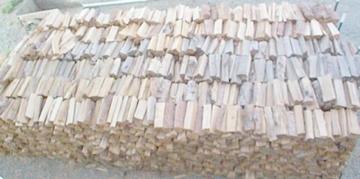
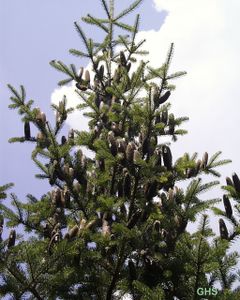
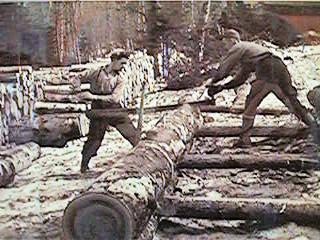
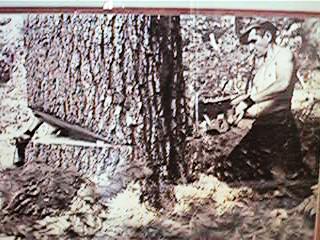
The pictures above show examples of firewood cut and stacked, balsam fir tips, balsam fir, a bow saw, the axe method of felling trees, a two-man buck saw in use, an early chainsaw of the type R had, and a man using one of those old chainsaws. The balsam firs were used for pulp wood at the paper mill, and the tips saved by my aunt. The tips we gathered for her when we (R and F at that time as I was a tad youngish) felled a balsam fir were processed, as the Indians did, by my aunt and Mrs F. First they'd chop them into smaller bits to allow more of the fragrance to seep out, then they were placed on racks and dried in the oven, using low heat. Afterward they'd use them to stuff pillows or add them to quilts for the aroma and the supposed medicinal value to the respiratory system of the fumes. These would hold their aroma for decades with proper care and refreshing, again using very low heat. We had quilts that had been passed down through many generations that were still aromatic after more than a hundred years. The Indians and early settlers used balsam firs for a number of medicinal purposes up until today, although their modern use isn't as widespread as it once was. There are companies here today still making balsam fir products.
At that time, the chainsaw was a new and bulky contraption and awkward to use. It could, however, greatly speed up the felling process. The model R bought was the same as in the photo, and was rather reliable compared to the earlier types. Neither he nor F really took to the machines until near the time when I left the farm, and usually employed the old axe method of tree farming. The way it worked that first year, and several ensuing years, was for R and F to go to the woods to work after morning chores had been done. They would select the trees to harvest one by one, never cutting more than seven to ten per acre at most. They would figure out how much they wished to cut and proceed until they reached their goal. Never did they harvest more than they planned to get more money, as that would ruin their long-range management plan for the lots and leave them poorer in future times.
After school I'd harness the Boys and go with F to where they'd cut that day. We'd spend two to three hours hauling the crop of fresh-cut wood to the part of the closest pasture to the barn that had the rockiest soil. It was selected as it wouldn't "mud-up" the same as other places, and could be worked some in the spring, as it would dry out earliest of the fields. They tried to only cut and delimb as much as could be removed during a school-day evening. On the weekend, usually the late hours of Sunday afternoon, I'd harness the team to either the old wagon or the snow skid and myself and F would gather all the limbs that'd been removed.
These were used for many purposes, from chipping them to line the pig and goat pen floors, to cutting and drying the larger pieces for kindling/firewood, to be used mostly in the "sugar shed" where maple sap was boiled down in spring. The balsam fir tips were carefully gathered and presented to my aunt as mentioned above. None of the tree was ever wasted, unlike today's fast-paced clear-cutting methods that leave a trail of debris in their wakes. Although good for wildlife and forest growth regeneration, it's rather unsightly. I like to think we were much better stewards of what nature gave us. Looking back, I realize how in-touch we were with the land.
After the amount of trees they planned to harvest from all lots worked were cut, removed, and stacked in the "wood field", we would set about processing them for sale to the various parties awaiting them. The first to go were the easiest and gave us a bit of a break. These logs, destined for the paper mill, had to be cut into four foot lengths and loaded on the truck for transport to the mill or the river. The final destination was determined by the mill according to their supply. If the mill wood pile was full, we'd haul the wood several extra miles upriver to a dumping dock, where we emptied the truck's cargo into the river using the tilt on the bed. There they'd join other logs on their way floating toward the mill's river pick-up conveyer for ingestion to the paper making process. This was occasionally done in winter if cash was needed for an emergency of some sort.
The next to go were the "lumber quality" logs that were cut to twelve foot lengths for the lumber mill. They were hauled to the river at a point above that mill for later processing into two-by-fours and their wooden brethren. The shorter sections of these logs were saved and delivered to the "small products" wood mill for use as dowels, furniture, boxes, etc. Then the remaining wood was cut on F's old saw mill, split, stacked, and then delivered green to various people in the area. They would dry it for a year or more, and then use it for their wood furnaces, stoves, and fireplaces. This required the most work and always lasted well into the summer. It seemed to always be a race to complete the processing of the wood for our fires, always the last, before hay harvest was upon us for the first cutting. Sometimes it would be done only on rainy days when we could work the wood but not the hay.
Any way you look at it, life on the farm was always filled with hard, but rewarding, work. One thing I'll carry with me to my grave, is the memory of how good those old rough sheets smelled and felt after a day of school and work, or just work. It was never "just school", as one part of going to school, after tending to the horses, was helping load the milk delivery station wagon and then delivering milk before school. My aunt was invariably the delivery person, and would work out her route so as to deliver the bulk of our goods on the way to dropping me off at school. I guess it was a lot of work for anyone, let alone a kid. But I wasn't alone, as there were loads of farm kids doing similar work each day. We were the only milk delivery farm, but many others delivered other farm products to stores and individuals. It all hinged on the type of farming their families were engaged in. We all had one thing in common though, even as the town kids looked down on us as inferior in some way, we knew among ourselves that we knew more than they could imagine. This work ethic showed itself continually during my working years in others of a similar background. These folks were always dependable and hard working, not that others weren't, it's just that farm-raised folks were ALWAYS that way. Until inspiration strikes again, take care and keep smiling.
A Little About Woodlot Work
As I mentioned previously, we had woodlots we worked in fall, winter, and processed the cut wood mostly in late spring and summer. From mid-March until late April was a time of very little wood activity due to the mud from the snow-melt. After the ground dried, a week or two was required to remove, repair, and store the snow fencing. Then, a few days to a week or more was spent scouring the fields for the new "rock crop". This consisted of all the rocks pushed up by the freeze/thaw cycle over the fall-spring time frame. The amount of time required was totally dependent on the number and size of the "new" rocks.
As we gathered the rocks we'd sort them roughly by size and shape as we loaded the old horse drawn wagon. Again the team amazed me on the first day I drove them to perform this task. As soon as we'd gotten to the farthest reaches of the field to be scoured over, they pulled up beside the first rock we came to with no input from the reins. This intrigued me as they'd ignored all the rocks we'd passed on the way, apparently knowing from past experience that we'd start with the most remote stones and work our way back in. Their actions were always a source of wonderment to me.
When we'd gathered enough to lade the old wooden wagon to its capacity weight-wise, we'd head back toward the barn, going along one of the stone walls that enclosed several of our pastures and hayfields. If we came to a spot needing stones put back on the walls from where they'd fallen, or unfinished sections of wall, we'd pull up and do whatever was needed. The newly gathered stones were employed in the construction of new sections, after which we'd remove whatever other fence had been previously installed there. Once this spring task was completed it was time to tackle the trees felled and removed during the fall and winter. These logs were those which hadn't been hauled to one of the mills during the winter, and were partially used for other purposes, one being firewood to sell in town.
The pictures above show examples of firewood cut and stacked, balsam fir tips, balsam fir, a bow saw, the axe method of felling trees, a two-man buck saw in use, an early chainsaw of the type R had, and a man using one of those old chainsaws. The balsam firs were used for pulp wood at the paper mill, and the tips saved by my aunt. The tips we gathered for her when we (R and F at that time as I was a tad youngish) felled a balsam fir were processed, as the Indians did, by my aunt and Mrs F. First they'd chop them into smaller bits to allow more of the fragrance to seep out, then they were placed on racks and dried in the oven, using low heat. Afterward they'd use them to stuff pillows or add them to quilts for the aroma and the supposed medicinal value to the respiratory system of the fumes. These would hold their aroma for decades with proper care and refreshing, again using very low heat. We had quilts that had been passed down through many generations that were still aromatic after more than a hundred years. The Indians and early settlers used balsam firs for a number of medicinal purposes up until today, although their modern use isn't as widespread as it once was. There are companies here today still making balsam fir products.
At that time, the chainsaw was a new and bulky contraption and awkward to use. It could, however, greatly speed up the felling process. The model R bought was the same as in the photo, and was rather reliable compared to the earlier types. Neither he nor F really took to the machines until near the time when I left the farm, and usually employed the old axe method of tree farming. The way it worked that first year, and several ensuing years, was for R and F to go to the woods to work after morning chores had been done. They would select the trees to harvest one by one, never cutting more than seven to ten per acre at most. They would figure out how much they wished to cut and proceed until they reached their goal. Never did they harvest more than they planned to get more money, as that would ruin their long-range management plan for the lots and leave them poorer in future times.
After school I'd harness the Boys and go with F to where they'd cut that day. We'd spend two to three hours hauling the crop of fresh-cut wood to the part of the closest pasture to the barn that had the rockiest soil. It was selected as it wouldn't "mud-up" the same as other places, and could be worked some in the spring, as it would dry out earliest of the fields. They tried to only cut and delimb as much as could be removed during a school-day evening. On the weekend, usually the late hours of Sunday afternoon, I'd harness the team to either the old wagon or the snow skid and myself and F would gather all the limbs that'd been removed.
These were used for many purposes, from chipping them to line the pig and goat pen floors, to cutting and drying the larger pieces for kindling/firewood, to be used mostly in the "sugar shed" where maple sap was boiled down in spring. The balsam fir tips were carefully gathered and presented to my aunt as mentioned above. None of the tree was ever wasted, unlike today's fast-paced clear-cutting methods that leave a trail of debris in their wakes. Although good for wildlife and forest growth regeneration, it's rather unsightly. I like to think we were much better stewards of what nature gave us. Looking back, I realize how in-touch we were with the land.
After the amount of trees they planned to harvest from all lots worked were cut, removed, and stacked in the "wood field", we would set about processing them for sale to the various parties awaiting them. The first to go were the easiest and gave us a bit of a break. These logs, destined for the paper mill, had to be cut into four foot lengths and loaded on the truck for transport to the mill or the river. The final destination was determined by the mill according to their supply. If the mill wood pile was full, we'd haul the wood several extra miles upriver to a dumping dock, where we emptied the truck's cargo into the river using the tilt on the bed. There they'd join other logs on their way floating toward the mill's river pick-up conveyer for ingestion to the paper making process. This was occasionally done in winter if cash was needed for an emergency of some sort.
The next to go were the "lumber quality" logs that were cut to twelve foot lengths for the lumber mill. They were hauled to the river at a point above that mill for later processing into two-by-fours and their wooden brethren. The shorter sections of these logs were saved and delivered to the "small products" wood mill for use as dowels, furniture, boxes, etc. Then the remaining wood was cut on F's old saw mill, split, stacked, and then delivered green to various people in the area. They would dry it for a year or more, and then use it for their wood furnaces, stoves, and fireplaces. This required the most work and always lasted well into the summer. It seemed to always be a race to complete the processing of the wood for our fires, always the last, before hay harvest was upon us for the first cutting. Sometimes it would be done only on rainy days when we could work the wood but not the hay.
Any way you look at it, life on the farm was always filled with hard, but rewarding, work. One thing I'll carry with me to my grave, is the memory of how good those old rough sheets smelled and felt after a day of school and work, or just work. It was never "just school", as one part of going to school, after tending to the horses, was helping load the milk delivery station wagon and then delivering milk before school. My aunt was invariably the delivery person, and would work out her route so as to deliver the bulk of our goods on the way to dropping me off at school. I guess it was a lot of work for anyone, let alone a kid. But I wasn't alone, as there were loads of farm kids doing similar work each day. We were the only milk delivery farm, but many others delivered other farm products to stores and individuals. It all hinged on the type of farming their families were engaged in. We all had one thing in common though, even as the town kids looked down on us as inferior in some way, we knew among ourselves that we knew more than they could imagine. This work ethic showed itself continually during my working years in others of a similar background. These folks were always dependable and hard working, not that others weren't, it's just that farm-raised folks were ALWAYS that way. Until inspiration strikes again, take care and keep smiling.
Subscribe to:
Posts (Atom)